Systems & rotations · 6 min read
The 5-1: one setter, every rotation
How it works, why competitive teams run it, and the one trade-off you accept.
Updated August 28, 2026
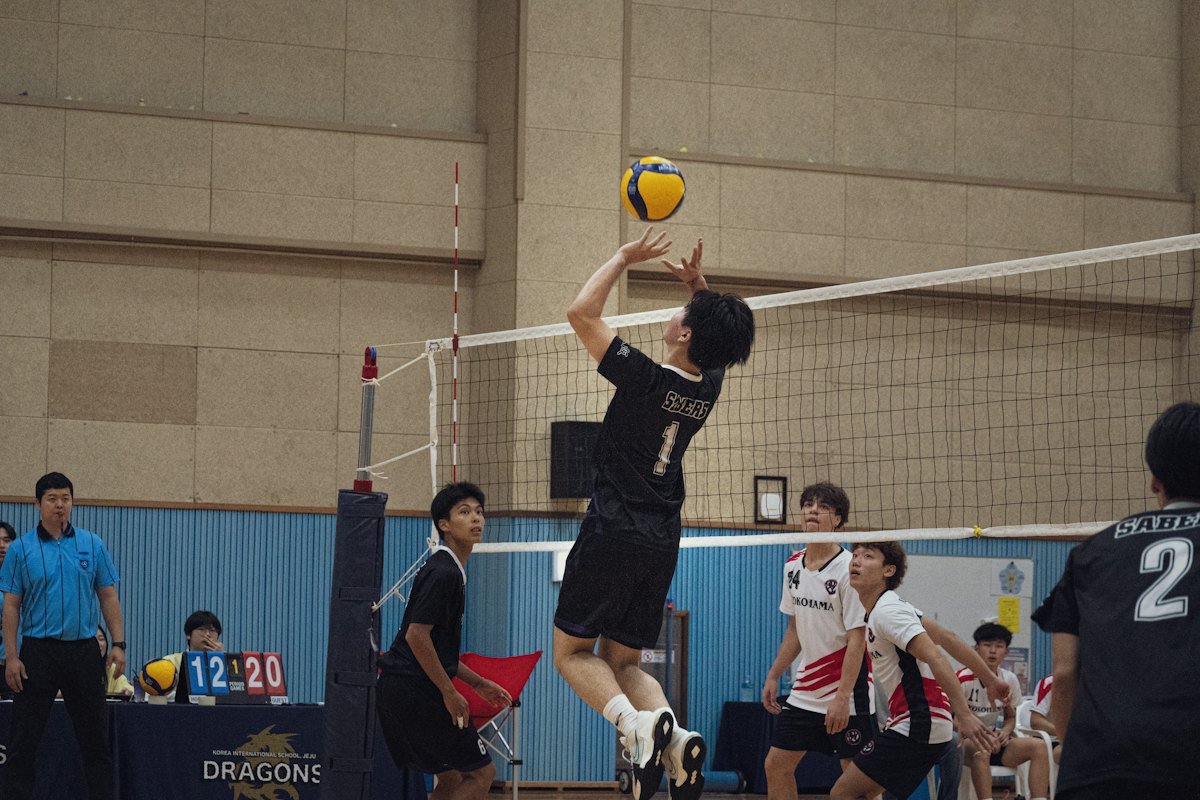
The 5-1 volleyball rotation uses one setter who sets in all six rotations, giving your team a single, consistent playmaker who touches the ball on nearly every play. The name is shorthand for the makeup of the six players on the court: five who attack and one who always sets. It is commonly taught and often chosen in competitive high school, club, and college volleyball because the offense runs the same way every time down the court, no matter where your team is in the rotation.
This page explains exactly how the 5-1 works, how the setter gets to the net from the back row, and the one trade-off you accept in return for that consistency. Use the diagrams on this page to follow along: they show all six rotations, including the base positions, the serve-receive formation, and the switch after the ball is served.
What is a 5-1 in volleyball?
A 5-1 is an offensive system with one designated setter (S, the player who runs the offense by delivering the second ball for a hitter to attack) and five other players who are all attackers: two outside hitters (OH, who hit from the left side), two middle blockers (MB, who hit quick balls in the middle), and one opposite or right-side hitter (OPP). The single setter sets in every one of the six rotations, so the ball always goes to the same pair of hands. That is the whole appeal of the system.
Because there is only one setter, the offense feels the same to your hitters no matter where the team is rotating. The tempo, the hand set, and the shot calls stay consistent, which lets an experienced setter build real chemistry with each hitter. Compared with a 6-2 (two setters, so you always have three front-row attackers) or a 4-2 (two setters, and the front-row one sets), the 5-1 trades some front-row firepower in half its rotations for that steady, one-setter offense.
Remember that all six players still rotate clockwise one position each time your team wins the serve back, following the path 2 to 1 to 6 to 5 to 4 to 3 and around again. Each player serves when they reach zone 1, the back-right position. The setter rotates just like everyone else. What makes it a 5-1 is that only one of those six players ever runs the offense.
How the setter penetrates from the back row
In three of the six rotations the setter is in the back row (zones 1, 6, and 5). In these rotations the setter penetrates, which simply means running up toward the right-front area near the net (around zone 2) after the serve so they are in position to set the second ball. This is legal because overlap rules apply only at the instant the server contacts the ball. Once the serve is struck, players may move under the applicable rules (while front-row/back-row attack and block restrictions still matter), so the setter is free to release to the net.
This back-row penetration is the best-case setup for the 5-1. When the setter is in the back row, all three front-row spots are filled by hitters, so you have three attackers available on every swing. The diagrams on this page show the setter's penetration path in each of these three rotations, from their legal starting spot to their target at the net.
The key coaching point is that the setter must first stand in a legal position at serve contact, then release to the net. Leave too early and you risk an overlap violation; release too late and you arrive at the net off balance. Practicing that first step out of serve receive is what makes a 5-1 setter reliable.
“The most important switch in the 5-1 is always the setter's.”
The trade-off: two front-row attackers
The cost of running one setter is that in the other three rotations the setter is in the FRONT row (zones 4, 3, and 2). In these rotations the setter is one of your three front-row players, which leaves only TWO front-row attackers instead of three. Your offense is a little less dangerous here because there is one fewer hitter at the net.
Good teams manage this in two ways. First, when the setter is front row they can dump the ball over on the second contact, tipping or attacking it themselves to keep blockers honest, since a front-row player is legally allowed to attack above the net. Second, the back-row hitters can attack from behind the 10-foot line (also called the 3-meter or attack line), adding a threat that does not count against the front-row attacker count. The diagrams show which rotations are front-row-setter rotations so you can plan your strongest lineups around them.
When people talk about strong and weak rotations in a 5-1, this is usually what they mean: back-row-setter rotations give you three attackers and are strong, while front-row-setter rotations give you two attackers and need a little extra help.
5-1 serve receive and the switch
5-1 serve receive is your passing formation for each rotation, and it must be a legal formation at the moment the opponent serves. That means every player has to respect the overlap rules relative to their adjacent neighbors: within a row the left-to-right order must hold, and each front-row player must be closer to the net than the back-row player directly behind them. Remember that overlap is judged only against adjacent players, not diagonal ones, which gives you room to hide the setter and non-passing hitters out of the primary passing lanes while everyone stays legal.
Once the server contacts the ball, the switch happens: players move to their specialist spots. The setter releases to the net to set, the outside hitters slide to the left pin, the middle blocker gets to the middle, and the opposite works to the right. The libero and any defensive specialists settle into their back-row defensive spots. The diagrams on this page show both the legal serve-receive formation and where everyone switches to afterward, for all six rotations.
The most important switch in the 5-1 is always the setter's. Whether they start in the back row or the front row, getting the setter to the target quickly and legally is the single habit that makes the whole system run smoothly.
Who should run a 5-1?
The 5-1 is the right choice when you have one setter who is clearly your best ball-handler and can play solid back-row defense in the rotations where they are away from the net. Because that setter is on the court for all six rotations, they need stamina, consistency, and enough court sense to run the offense from anywhere. Coaches commonly teach a 5-1 at high school varsity, club, and college levels for exactly these reasons.
Younger or newer teams often start with a 4-2 (front-row setter, often chosen as an easy teaching system) or a 6-2 (two setters, always three hitters) before moving to a 5-1. If your team has one standout setter and hitters who benefit from a consistent set, the 5-1 is usually the system you grow into. Build your lineup with the free tool on this site and step through all six rotations to see exactly how your 5-1 will look on the court.
Coaching focus: who is available to attack?
Print or open the player cards for one full cycle and ask each athlete: in which three rotations am I a front-row attacker, and in which three am I back-row? Then mark the three setter-front rotations where you only have two front-row hitters. That single drill makes the 5-1 trade-off concrete before you ever talk about penetration paths.
Use the builder’s Base / Serve receive / In play views for one setter-back rotation and one setter-front rotation side by side. The decision you are teaching is not “which system is best,” but “where does the team take its chances when the setter is up front?”
Explore each rotation on its own
Frequently asked questions
- What does 5-1 mean in volleyball?
- It means five hitters and one setter. In a 5-1 rotation, a single setter sets in all six rotations, while the other five players are attackers. The numbers describe the makeup of the six players on the court, not the score.
- Why does a 5-1 only have two front-row attackers in some rotations?
- In the three rotations where the setter is in the front row, the setter takes up one of the three front-row spots, leaving only two front-row hitters. In the three rotations where the setter is in the back row, all three front-row players are hitters, so you get three attackers.
- How does the setter get to the net in a 5-1?
- When the setter is in the back row, they penetrate: after the serve is contacted, they run up to the right-front area near the net to set the second ball. This is legal because overlap rules apply only at the instant of serve contact, after which players may move under the applicable rules, while attack and block restrictions by row still apply.
- Is a 5-1 better than a 6-2?
- Neither is strictly better. A 5-1 gives you one consistent setter and better chemistry but only two front-row hitters in three rotations. A 6-2 always gives three front-row hitters but requires two players who can both set and hit. The right choice depends on your roster.
- Can the setter attack the ball in a 5-1?
- Yes, especially when the setter is in the front row. A front-row setter can legally attack or dump the ball over the net on the second contact, which keeps the opposing blockers honest and helps make up for having one fewer front-row hitter.
Sources, and how the diagrams are drawn
Keep reading
Systems & rotations · 5 min read
The 6-2: three hitters at the net, every time
Two setters take turns from the back row. Here is the handoff, and what it asks of your roster.
Systems & rotations · 6 min read
The 4-2: the system most teams learn first
Whoever is in the front row sets, so every play looks the same. A simple start that grows into a 5-1 or 6-2.
Systems & rotations · 5 min read
Your setter doesn't have to start in zone 1
What the rules actually require of a starting lineup, and how to choose the rotation you open with.