Systems & rotations · 6 min read
The 4-2: the system most teams learn first
Whoever is in the front row sets, so every play looks the same. A simple start that grows into a 5-1 or 6-2.
Updated August 28, 2026
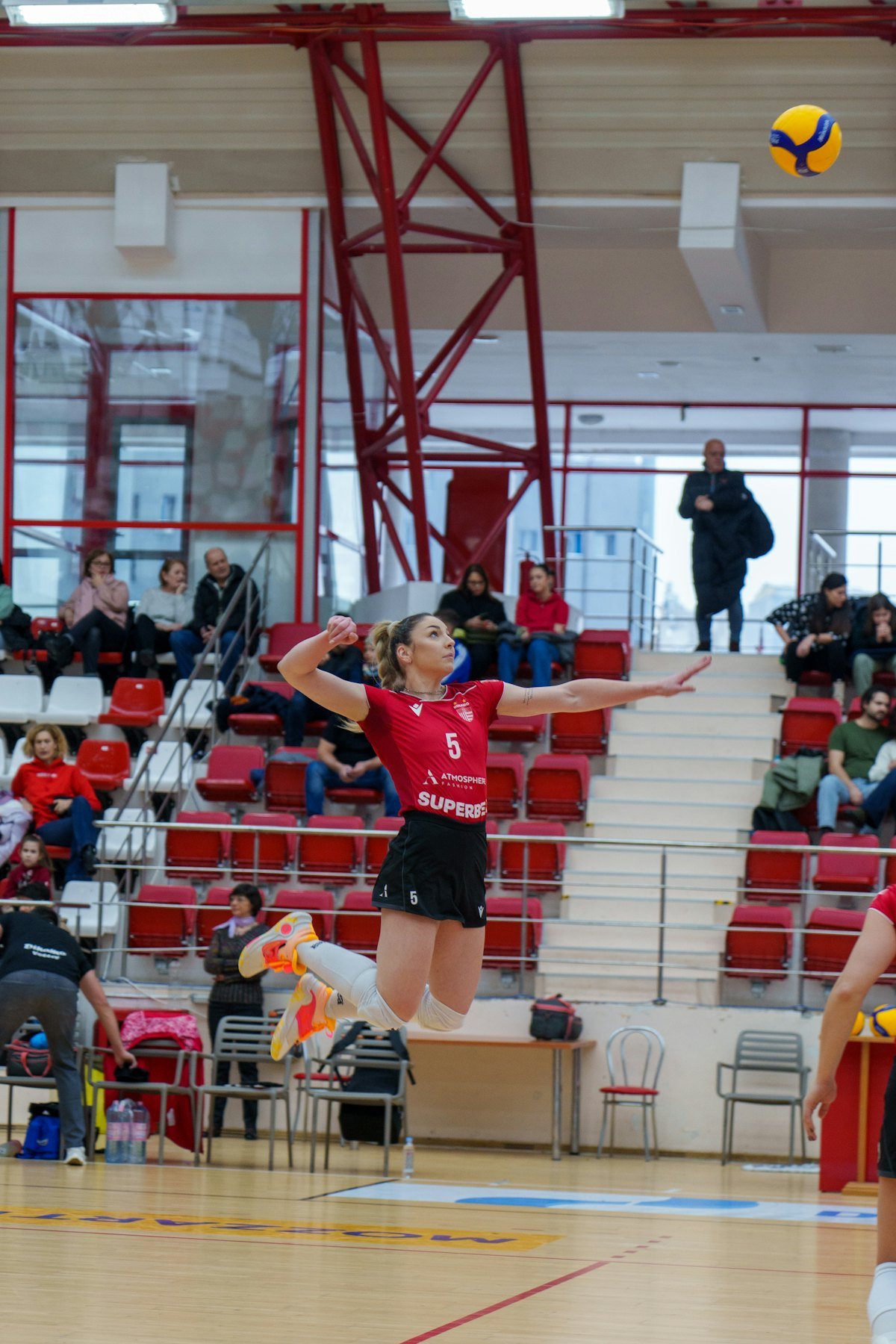
The 4-2 volleyball rotation is commonly taught as one of the easiest offensive systems to learn, which is why many beginner and youth teams start here. The name is easy to decode: the "4" means four hitters (attackers), and the "2" means two setters. The setter is the player who takes the second contact and "sets" the ball high and controlled so a hitter can spike it. In a 4-2, one of your two setters is always in the front row, and that front-row setter runs the offense while the other setter waits their turn in the back row.
Because the setter is already up near the net where they need to be, a 4-2 removes the trickiest part of running an offense: nobody has to sprint across the court to get into position. That makes it the perfect training-wheels system for new players. Use the live diagrams on this page to watch all six rotations, and read on to understand exactly how it works and when it is time to move on.
What Is a 4-2 in Volleyball?
A 4-2 is a system built around two setters positioned opposite each other in the rotation, so that no matter how the team rotates, one setter is always in the front row and the other is always in the back row. Whoever is in the FRONT row sets. This is the key rule that separates a 4-2 from every other system, and it is what makes the 4-2 so beginner-friendly.
Remember that players rotate clockwise one spot each time their team wins the serve back, and the court has six zones: zone 1 is back right (the server), then 2 is front right, 3 is front middle, 4 is front left, 5 is back left, and 6 is back middle. Because the two setters start on opposite sides of the rotation, as the whole team turns clockwise the setters trade off cleanly. As one setter rotates from the front row (zone 4) into the back row, the other rotates from the back row (zone 5) up into the front row and takes over setting duties. You always have a setter in the front row, ready to go.
In practice, this means every play looks similar. The ball comes over, your passers pass it to the front-row setter waiting near the net, and that setter delivers the ball to one of the two available front-row hitters. The diagrams on this page show each of the six rotations so you can see how the setting job hands off from one setter to the other.
Two Front-Row Attackers: The Core Setup
The front row in volleyball is zones 2, 3, and 4 (the three positions closest to the net). In a 4-2, one of those three front-row spots is taken by the setter on every rotation. That leaves exactly TWO front-row attackers available to hit on any given play. This is the defining trade-off of the 4-2: you gain a simple, always-ready setter, but you give up a third front-row hitting option.
A common 4-2 teaching pattern has the setter finish in the middle of the front row (zone 3) once the ball is in play, with a hitter on the left (zone 4) and a hitter on the right (zone 2). That gives the setter two hitters to choose from, one on each side, which is easy to run and easy to read. Just remember that overlap rules apply only at the exact moment the server strikes the ball. At that instant, each player must be in a legal position relative to their adjacent neighbors; once the serve is contacted, players may move under the applicable rules (the switch), while front-row/back-row attack and block restrictions still apply, so the setter can slide to the middle and the hitters can shift to their preferred sides.
Two front-row attackers is plenty at the beginner level, where the goal is simply to pass, set, and hit in a clean three-touch sequence. The simplicity is the whole point. The diagrams on this page illustrate the serve-receive formation and the switch for each rotation so your players can see where to stand at serve contact and where to move afterward.
“Beginners can focus on the hands and the set itself instead of a frantic run.”
Why the 4-2 Is Great for Beginners
The single biggest hurdle for new setters is footwork: in more advanced systems the setter often starts in the back row and has to 'penetrate,' sprinting to the net before the pass arrives. The 4-2 eliminates that entirely. The setter is already in the front row and only takes a step or two to reach the target near the net. Beginners can focus on the hands and the set itself instead of a frantic run.
It also simplifies serve receive. With the setter already up front, your back-row players (zones 1, 5, and 6) can focus on one job: passing a good ball to the target. Fewer moving parts means fewer collisions, fewer confused faces, and more successful three-touch rallies, which is how young players build confidence and actually enjoy the game.
Finally, the 4-2 spreads the setting responsibility across two players. That means twice as many kids get real reps learning to set, which pays off later. Many coaches use the 4-2 for a season or two specifically to develop multiple setters before committing to a system that leans on just one.
How to Progress From a 4-2 to a 5-1 or 6-2
The 4-2 is a starting point, not a ceiling. Once your setters can consistently deliver a clean ball and your hitters want more offensive firepower, it is time to consider a 5-1 or a 6-2. Both systems solve the 4-2's main weakness: only having two front-row attackers.
The 6-2 is often the natural next step because it still uses two setters, so your players keep the roles they know. The difference is that in a 6-2 the BACK-row setter sets, penetrating to the net, while the front-row setter plays as a right-side attacker (opposite). The result is THREE front-row hitters on every rotation instead of two. It asks more of your setters, since both must be able to set and hit, but it is a smaller mental leap from the 4-2 than you might expect.
The 5-1 goes the other direction: one setter runs the offense in all six rotations. You get one consistent decision-maker, plus three front-row attackers in the three rotations where the setter is in the back row, though only two attackers in the three rotations where the setter is front row. The 5-1 is often chosen at higher levels, and it is a natural next step once you have identified a single primary setter you want to build around. Whichever path you choose, the habits your players learn in the 4-2, clean passing, controlled setting, and calling for the ball, carry directly over.
Coaching focus: a simple practice walkthrough
Walk one full serving cycle with the front-row setter calling “mine” on every second ball. Stop at serve contact, check left-to-right and front-to-back order, then release to the switch. Repeat for the other setter after one rotation. This progression teaches legality first, then role clarity, without asking anyone to penetrate from the back row yet.
When both setters can deliver a controlled ball and your hitters want a third attacker, compare this page with the 6-2 guide, that is usually the next teaching step, not an overnight jump to a 5-1.
Explore each rotation on its own
Frequently asked questions
- What does the 4-2 stand for in volleyball?
- The numbers describe how many players fill each role on the court: four hitters (attackers) and two setters. In a 4-2, whichever of the two setters is in the front row does the setting, so there is always a setter near the net ready to run the offense.
- Why is the 4-2 rotation good for beginners?
- The setter starts in the front row, so they don't have to sprint from the back court to reach the net. That removes the hardest part of learning to set. It also keeps serve receive simple for the back-row passers and gives two players regular reps at setting, which builds skills for the future.
- How many hitters do you have at the net in a 4-2?
- Two. On every rotation, the setter occupies one of the three front-row spots (zones 2, 3, and 4), which leaves two front-row attackers. This is the main trade-off of the 4-2: it is simple to run, but you give up a third front-row hitting option compared with a 5-1 or 6-2.
- Where does the setter stand in a 4-2?
- A common coaching convention is for the front-row setter to move to the middle of the net (zone 3) after the serve so they can set to a hitter on either side. Just remember overlap rules apply only at the moment of serve contact, so the setter must be in a legal position relative to their adjacent neighbors at that instant, then can switch to the middle once the ball is served.
- When should a team switch from a 4-2 to a 5-1 or 6-2?
- Move on once your setters can reliably deliver a good ball and your team wants more attacking options. The 6-2 keeps two setters and gives you three front-row hitters every rotation, so it is usually the smoother next step. The 5-1 uses a single setter for all six rotations and is often chosen at higher levels.
Sources, and how the diagrams are drawn
Keep reading
Systems & rotations · 6 min read
The 5-1: one setter, every rotation
How it works, why competitive teams run it, and the one trade-off you accept.
Systems & rotations · 5 min read
The 6-2: three hitters at the net, every time
Two setters take turns from the back row. Here is the handoff, and what it asks of your roster.
Systems & rotations · 5 min read
Your setter doesn't have to start in zone 1
What the rules actually require of a starting lineup, and how to choose the rotation you open with.