Court & rules · 5 min read
Overlap: where you can stand when the ball is served
The referee isn't checking zones. They're checking neighbours, at one exact moment.
Updated August 28, 2026
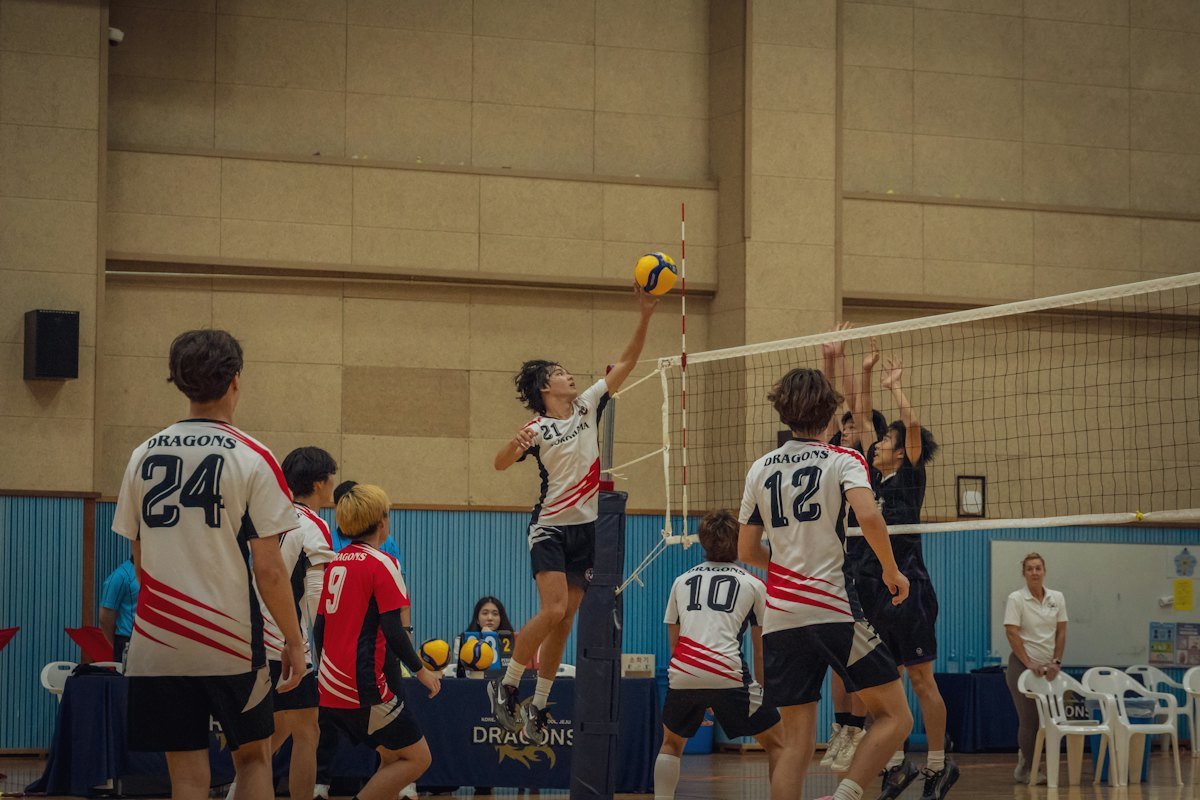
Volleyball overlap rules decide where each of your six players is allowed to stand at the exact moment the ball is served. Break one, and the referee calls a positional fault (also called an overlap or lineup fault): the other team gets the point and the serve. It sounds scary, but the rule is simpler than most coaches make it out to be. Overlap only checks each player against their nearest neighbors, and it only matters for one split second. Use the live court diagrams on this page alongside the explanation below and it will click fast.
What overlapping actually means
Overlapping happens when a player is standing in the wrong spot relative to a teammate at the instant the server contacts the ball. The referee is not checking whether you are standing perfectly inside your zone. They are checking the order of players next to each other. If two neighbors are out of order, that is an overlap, and it is a fault.
Here is the key idea that saves youth teams a lot of confusion: overlap is about relative position, not absolute position. Nobody has to stand on a painted line or in the middle of their zone. A player just has to keep the correct order compared to the specific teammates the rule cares about. The diagrams on this page show each of the six rotations with legal starting positions, so you can see how much freedom you really have.
The adjacency rules, in plain language
Every player is checked only against their adjacent neighbors, never against diagonal ones. There are two simple checks.
Left-to-right order within a row. In the front row, zone 4 must be to the left of zone 3, and zone 3 must be to the left of zone 2. In the back row, zone 5 must be to the left of zone 6, and zone 6 must be to the left of zone 1. Think of it as keeping your row in the right left-to-right sequence.
Front player ahead of the back player behind them. Each front-row player must be closer to the net than the back-row player directly behind them. Zone 2 must be ahead of zone 1, zone 3 ahead of zone 6, and zone 4 ahead of zone 5. As long as those pairings hold, you are legal.
That is the whole rule. You do not compare zone 2 to zone 4, or zone 3 to zone 1, or any diagonal pair. Only side-by-side neighbors in the same row, and the front-back pair in the same column. The diagrams highlight these relationships for all six rotations.
“Every player is checked only against their adjacent neighbors, never against diagonal ones.”
It only matters at the moment of serve contact
This is the part that unlocks everything. Overlap rules apply for one instant: the moment the server strikes the ball. Up to that moment your players must be in a legal formation. After that moment, players may move under the applicable rules. Front-row and back-row attack and block restrictions still apply, and your league rulebook controls any extra limits.
This is why teams run a serve receive formation and then switch. Serve receive is your passing formation, arranged so it is legal at serve contact. The switch is what happens right after the serve: the setter sprints to the net, hitters move out to their pins (the left and right sides near the antennas), and back-row players drop into defense. All of that movement is completely legal because the ball has already been served.
So a setter who needs to end up at the net can start somewhere else entirely, as long as their starting spot keeps them in order against their neighbors. Once the server contacts the ball, they release and go. The diagrams on this page show base position, serve receive, and the switch for each rotation so you can see exactly how players get from a legal start to where they actually want to play.
Common overlap mistakes youth teams make
Setter releasing too early. The setter creeping toward the net before the serve is contacted is one of the most frequent overlap faults coaches see at the youth level. If they leave before contact and that puts them out of order with a neighbor, it is a fault. The fix is simple: hold your legal spot until you hear the whack of the serve, then go.
Front and back players standing even. A back-row player who lines up level with or ahead of the front-row player in their column is overlapping. Zone 1 must stay behind zone 2, zone 6 behind zone 3, and zone 5 behind zone 4. Even a foot too far forward can draw the whistle.
Hitters lining up where they want to hit instead of where they are legal. An outside hitter naturally wants to stand on the left, but if the rotation puts them to the right of a teammate they must keep that order until the serve. Start legal, then switch.
Bunched passers crossing each other. When passers squeeze together in serve receive, it is easy for two neighbors to swap their left-to-right order without noticing. Give passers clear, staggered spots that preserve the order shown in the diagrams.
How to avoid a positional fault
Learn one rotation at a time. For each of your six rotations, decide one legal starting spot per player and drill it until it is automatic. The diagrams on this page give you a legal starting arrangement for every rotation, so you can copy them straight onto the court.
Check only the pairs that matter. When you set a formation, glance at each player against their row neighbors and the player in front of or behind them. Ignore the diagonals. If every neighbor pair is in order, the whole formation is legal.
Freeze, then release. Have players hold their legal position until serve contact, then move. If you build the habit of starting legal and switching after the serve, overlap faults nearly disappear, and your players still get to the spots where they play best.
Try it: legal vs illegal neighbour order
Pick any two neighbours in a row (for example zone 4 and zone 3). At serve contact, the left player’s right foot must not cross past the right player’s left foot. Now compare a front-row player with the back-row player in the same column, the front player must be closer to the net. Diagonal pairs are not checked. Use the diagram on this page as a labelled legal example, then deliberately swap two neighbours in a whiteboard drill so athletes can see an illegal order before they feel it in a match.
VolleyRoster’s checker highlights those same adjacency relationships in the builder; it does not replace a referee or every federation variation. See the Rule basis and model notes on this page.
Frequently asked questions
- When exactly do overlap rules apply?
- Only at the single moment the server contacts the ball. Up to that instant your six players must be in a legal formation. The moment the serve is struck, players may move under the applicable rules, which is how teams release the setter to the net and hitters to their pins, while row-based attack and block restrictions continue to matter.
- Do players have to stand inside their zone?
- No. Overlap is about relative order, not absolute location. A player only has to keep the correct order compared to their adjacent neighbors: left-to-right within their row, and the front player ahead of the back player behind them. Nobody has to stand on a line or in the center of a zone.
- Does overlap compare diagonal players?
- No. You only compare side-by-side neighbors in the same row (for example zone 4 left of 3 left of 2) and the front-back pair in the same column (zone 2 ahead of 1, 3 ahead of 6, 4 ahead of 5). Diagonal pairs are never checked.
- What is the penalty for an overlap?
- An overlap is a positional or lineup fault. The opposing team is awarded the point and the serve. There is no warning, so it is worth drilling legal starting spots until they are second nature.
- What overlap mistake do beginners make most often?
- The setter releasing toward the net before the serve is contacted. If leaving early puts them out of order with a neighbor, it is a fault. Teach players to hold their legal spot until they hear the serve, then switch to their positions.
Sources, and how the diagrams are drawn
Keep reading
Court & rules · 4 min read
Zones 1–6: the map under every rotation
Six fixed spots on your half of the court, why the numbering runs backwards, and how it drives everything else.
Court & rules · 5 min read
How rotations work: why everyone moves when you win the serve
The clockwise path, the serving order, and the six ways a team lines up.
Positions & roles · 6 min read
Six players, six jobs
Setter, outside, middle, opposite, libero and defensive specialist — what each one does, and where they play.