Serve receive & defense · Interactive lesson
Block and floor defense: one plan for six players
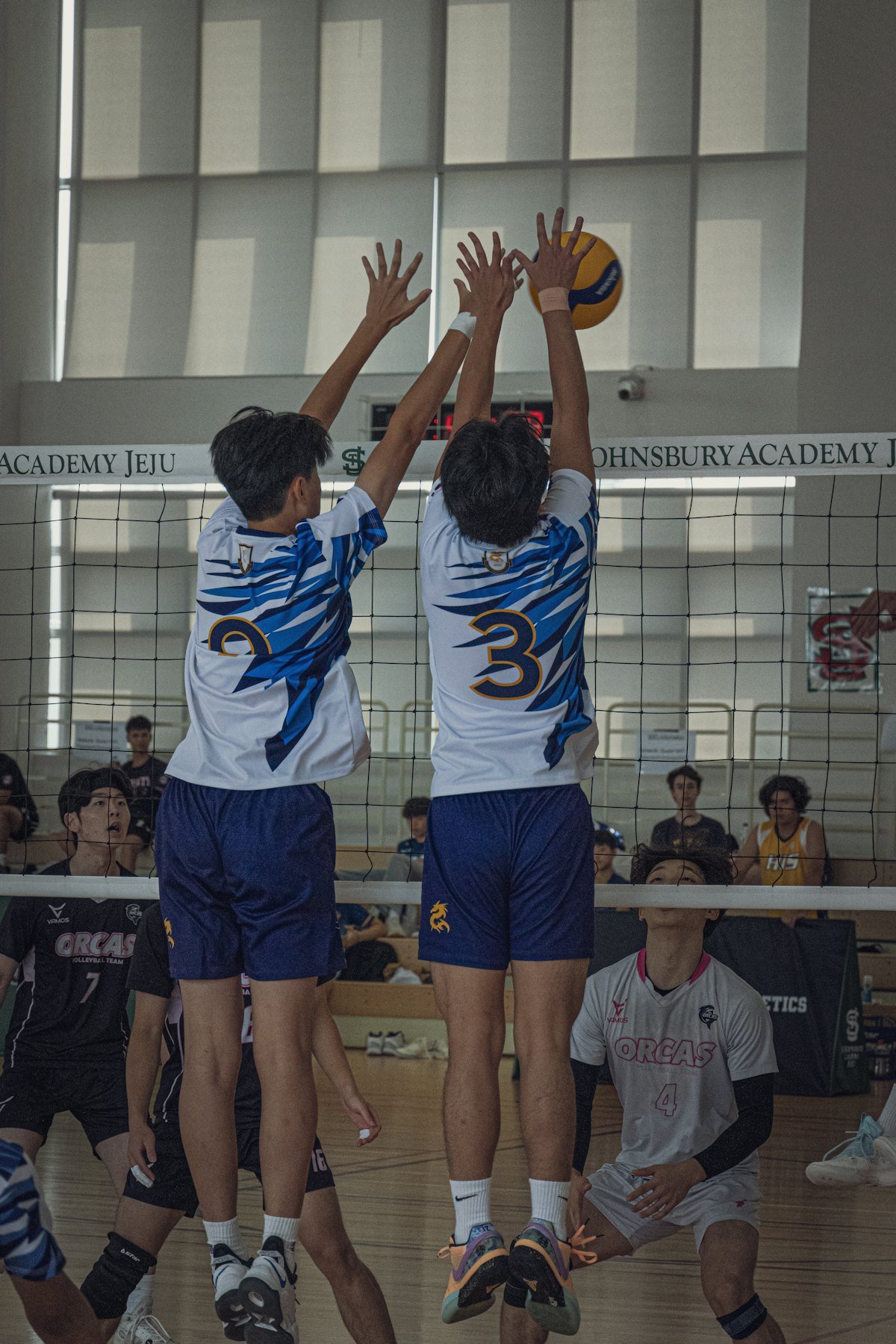
Defense is not six players trying to cover the whole court alone. It is a shared plan. The block influences where the attacker can hit, and the players behind the block prepare for the ball that gets through, comes off hands, or falls short.
This guide shows one common perimeter / 6-back teaching model. Your coach may use different assignments, depths, and block calls.
Step 1 of 5 — The opponent is in offense. Your front row identifies the likely outside attack.
- Player movement
- Defense zone
- Ball path
- Blocking
Tactical positions are one common teaching model. A coach can change depths, calls, and responsibilities.
Defense begins when the setter touches the ball.
The hitter's arm tells you where the ball is going late. The set tells you early. As the opponent's setter sends the ball to a pin or through the middle, blockers move toward the attack point and floor defenders shift to the space the block is designed to leave. Watch the Read phase before you watch the hitter swing.
Coach cue: Read the set before you read the swing.
The block tells the floor defenders what to protect.
A good block does not need to cover every possible shot. It makes one lane harder and gives the defense a clearer picture of the remaining court. If the block is assigned to take line, the defenders can lean toward cross-court and balls that glance off the block. If the block is assigned to take angle, the floor defense shifts to protect line. The call can change; the connection cannot.
Coach cue: Block a lane. Defend the rest.
Before the hitter swings, every defender needs one job.
First, the blockers close the space at the net and influence the attack. Second, deep defenders protect the hard-driven ball that clears or brushes the block. Third, a short defender reads tips, roll shots, and deflections that land in front of the deeper line. The exact player in each job changes with the rotation. The jobs stay the same.
- Blockers: Close the block and influence a lane.
- Deep defenders: Read hard attacks and high hands.
- Short defender: Own the ball that falls in front of the defense.
Touch the ball, then become an attacker.
A block touch or dig keeps the rally alive; it does not finish the job. The closest player controls the first contact, the setter or second-ball player gets to the next contact, and hitters transition into approach lanes. Practice the dig and the first transition step as one action. That is how defense becomes a counterattack.
Coach cue: Dig it, then become an attacker.
Four mistakes that make defense feel harder than it is.
- Waiting for the swing: Start moving as the set travels. The swing is the final confirmation, not the first clue.
- A gap in the block: If blockers do not close, the attacker sees daylight between their hands and the floor defenders cannot predict the lane.
- Six players deep: Someone has to own the short ball. Do not give every defender the same job.
- Standing on a dot: Zones are starting responsibilities. Read the ball and adjust within the zone.
Practice it: set-read freeze
Put six defenders on one side. A coach or setter on the other side calls or sets outside, middle, or right side. Freeze the picture when the ball leaves the setter's hands. Check three things: did the blockers move toward the set, does someone own the short ball, and are the deep defenders protecting the space behind the block? Once the shape is reliable, add a controlled attack and play the ball out.
A note about systems and rules
Volleyball rules control rotational order at service contact and front-row/back-row restrictions. The movement, defensive depths, block calls, and coverage assignments in these diagrams are coaching choices. Use the model that matches your team and league.